Key Takeaways
- Preparation is stewardship, not fear. Scripture pairs prayer with watchfulness, and a safety plan is how a church cares for the people God has entrusted to it.
- Most safety work is everyday care. Medical emergencies, lost children and upset visitors are far more common than violent threats, and a prepared team handles all of them better.
- A plan answers questions before a crisis does. Who calls 911, who meets responders, where the AED is, and how the team communicates should all be decided ahead of time.
- Every church is different. The right plan starts with an honest, on-site look at your campus, people and services.
- You can start for free. Church Preparedness Training offers a no-cost on-site assessment for churches in San Diego County.
When my church asked me to help put together a safety team, I said yes right away. Not because I expected something terrible to happen, but because I had spent nearly three decades in law enforcement and I knew one thing for certain: the time to prepare is before you need to.
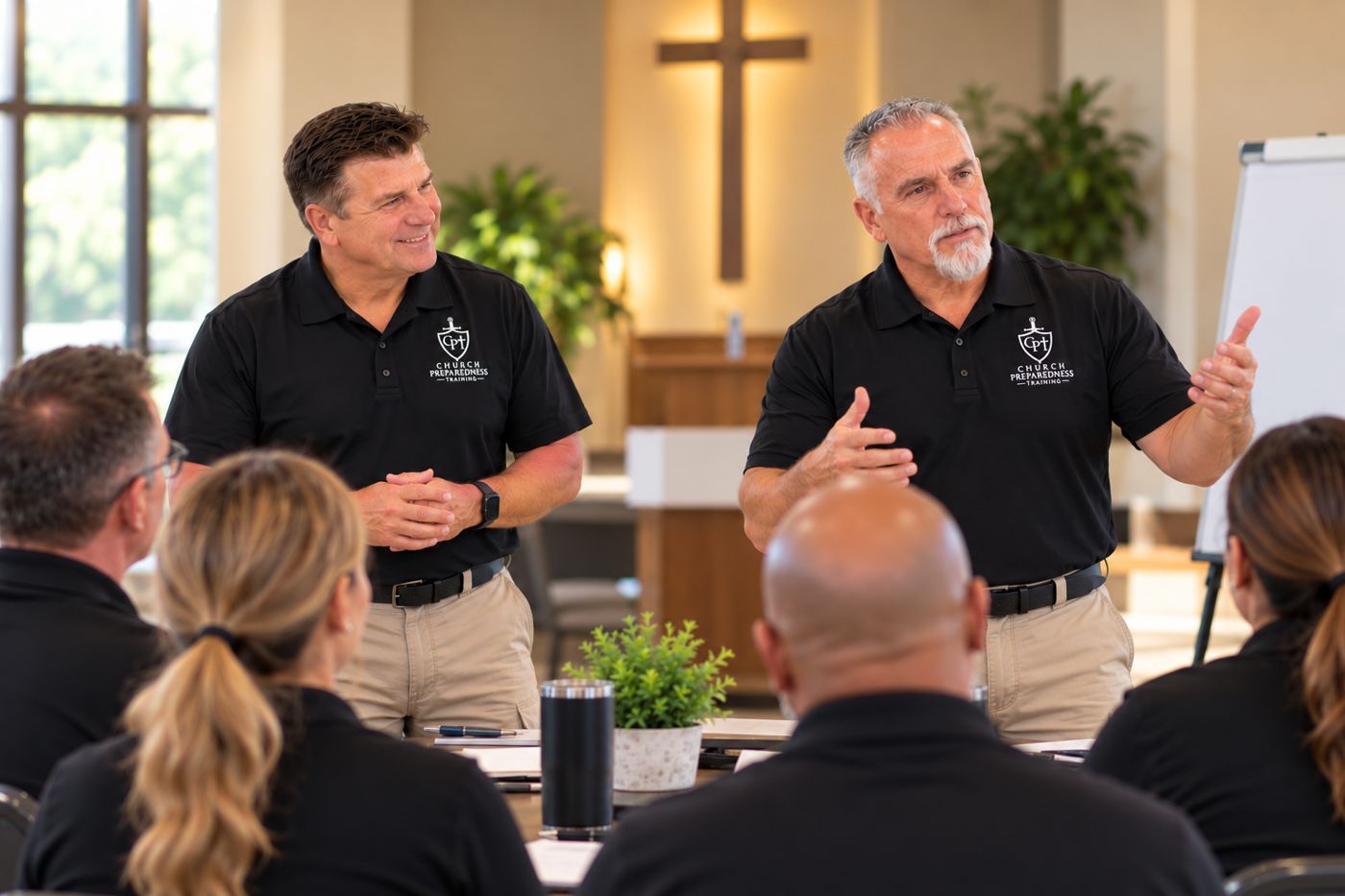
That conversation is how Church Preparedness Training began. Kirk and I built a team for our own church first. Then other pastors started asking questions. How do we start? Who should be on the team? What do we do if someone collapses in the middle of a service? We realized many churches want to do this well but don't have the knowledge or resources to get started. So we decided to help.
In this article I want to share why I believe every church, large or small, needs a safety plan, what that plan should include, and how you can begin building one this month.
What Is a Church Safety Plan?
A church safety plan is a written, practiced agreement about how your church will respond when something goes wrong. It names who does what, how people communicate, and where the resources are. It covers the everyday situations that happen in every congregation and the rare situations no one wants to think about.
A good plan is not a binder that sits on a shelf. It is something your safety team, ushers, greeters, children's ministry leaders and pastoral staff have read, talked through and practiced together. When the moment comes, nobody has to invent an answer under pressure.
Is Preparing for Danger a Lack of Faith?
Some people worry that talking about safety means living in fear. I see it the other way around. Scripture gives us a clear picture of faith and readiness working together.
In Nehemiah 4:9, the people rebuilding the wall of Jerusalem “prayed to our God and guarded the city day and night to protect ourselves.” They did both. They trusted God completely, and they took responsibility for the people around them. A few verses later, Nehemiah tells them, “Do not be afraid of them. Remember the Lord, who is great and awesome, and fight for your brothers, your sons, your daughters, your wives, and your homes.”
That is what a church safety team is: a group of people who love their congregation enough to pay attention, to be ready, and to step in when someone needs help. We pray, and we prepare. One does not replace the other.
What Does a Church Safety Team Actually Do?
When most people picture church security, they imagine the worst-case scenario. In reality, the overwhelming majority of what a safety team handles looks much more ordinary:
- Getting a nurse or doctor to someone who has fainted during worship
- Calling 911 and guiding paramedics to the right room
- Reuniting a lost child with their parents
- Calmly helping a visitor who is upset, confused or disruptive
- Keeping the children's wing secure during drop-off and pick-up
- Watching the parking lot and entrances while everyone else worships
A team that handles these moments well is also a team that is ready for the rare moment that is more serious. The same skills apply: awareness, communication, calm leadership and a clear plan.
Why Wait Until You Need It?
In my years as an officer and an instructor, I saw again and again the difference preparation makes. People who have thought through a situation ahead of time respond with clarity. People who haven't often freeze, or they react in ways that make things worse. That isn't a criticism of anyone. It's simply how we're wired under stress.
Under pressure, people fall back on what they have practiced. If your team has never discussed who calls 911, three people might call, or no one will. If no one knows where the first aid kit is, precious minutes are lost looking for it. A plan gives your team something solid to fall back on.
What Should a Church Safety Plan Include?
Every plan should be tailored to the church, but most strong plans answer the same core questions.
1. Roles and Responsibilities
Who leads the team on a given Sunday? Who is the backup? Who stays near the sanctuary, who watches the entrances, and who checks on the children's ministry? Clear roles prevent confusion and keep anyone from trying to do everything at once.
2. Communication
How does the team talk during a service without disrupting it? Many churches use radios with simple, agreed-upon language. Others use a group text. The method matters less than everyone knowing it and using it the same way.
3. Medical Emergencies
Medical events are the most common emergencies in any church. Your plan should name who responds, where the first aid kit and AED are kept, who is trained to use them, and who calls 911 and meets emergency responders at the door.
4. Disruptions and Difficult People
Sometimes a person comes in angry, intoxicated or in crisis. Your plan should describe how the team approaches, how it de-escalates, and when it is time to involve law enforcement. Kindness and calm usually resolve these situations, and training makes that far more likely.
5. Children's Ministry Security
Check-in and check-out procedures, classroom doors, and who is allowed in the children's area are some of the most important parts of any plan. Parents need to know their kids are safe.
6. Serious Threats
No one wants to plan for violence, but every church should have a basic, practiced response for a serious threat, including how to alert the team, how to protect the congregation, and how to communicate with law enforcement. This is an area where professional training is especially valuable.
7. After an Incident
Who documents what happened? Who follows up with the people involved? Who tells the pastor and church leadership? A short, consistent after-action process helps your team learn and improve every time.
Not sure where your church stands on these seven areas? That's exactly what our free on-site assessment is for. Request a free assessment and we'll walk your campus with you.
How Do You Start Building a Safety Plan?
The first step is an honest look at where your church is today. Every church is different. A congregation of 60 meeting in a rented space has different needs than a campus with multiple buildings and a school. That's why we don't believe in a cookie-cutter approach.
When we work with a church, we start by walking the campus with its leaders and looking at it with fresh eyes: entrances and exits, parking, sight lines, children's areas, communication, and the people already serving. From there, we help you decide what training your team needs and in what order.
A few practical steps you can take right away:
- Talk with your pastor. Pastoral support is essential. A plan without leadership buy-in rarely lasts.
- Identify a team leader. Choose someone calm, respected and willing to learn.
- Write down what you already do. Most churches have informal habits. Putting them on paper is the start of a plan.
- Locate your resources. Know where your first aid kits, AED, fire extinguishers and exits are.
- Schedule training. A plan only works if the people carrying it out have practiced it.
Can a Church Be Welcoming and Safe at the Same Time?
Absolutely. The goal is never to make church feel like a checkpoint. People should walk through your doors and feel welcomed, cared for and at peace. A well-trained safety team actually makes that easier, because the people serving know what to look for and how to respond with kindness and confidence.
Our mission at Church Preparedness Training is to empower faith communities to safeguard God's people while preserving a welcoming and peaceful place of worship. Those two goals belong together.
Frequently Asked Questions
Does a small church really need a safety plan?
Yes. Small churches face the same medical emergencies, disruptions and child-safety concerns as large ones, often with fewer people to respond. A simple, clear plan and a small trained team can make a real difference.
How long does it take to create a church safety plan?
A basic plan can be drafted in a few weeks once you've assessed your campus and chosen a team leader. Training and practice turn it into something your team can rely on, and good plans are reviewed and improved over time.
Who should be involved in creating the plan?
Your pastor or church leadership, your safety team leader, and representatives from ministries like children's ministry and hospitality. The people who will carry out the plan should help shape it.
Does our church need armed security?
That is a decision for each church's leadership, attorney and insurer. Many of the most important safety skills, such as awareness, communication, de-escalation and medical response, have nothing to do with weapons. We help churches understand their options so they can make an informed decision.
How much does a church safety assessment cost?
Our on-site assessment is free for churches in San Diego, San Diego County and the surrounding areas. We visit your church, identify vulnerabilities and talk through the training your team needs.
What training do you offer after the assessment?
We offer Fundamentals, Planning the Mission, Emergency Protocols and a Role Play add-on, all taught in person at your church. You can see details and pricing on our Training & Pricing page.
Request a Free Church Safety Assessment
If your church has been talking about safety but hasn't known where to start, I'd encourage you to take the first step now, before you need it. Kirk and I will come to your church, walk your campus with you, and help you see clearly where you stand, at no cost.
Request your free assessment →
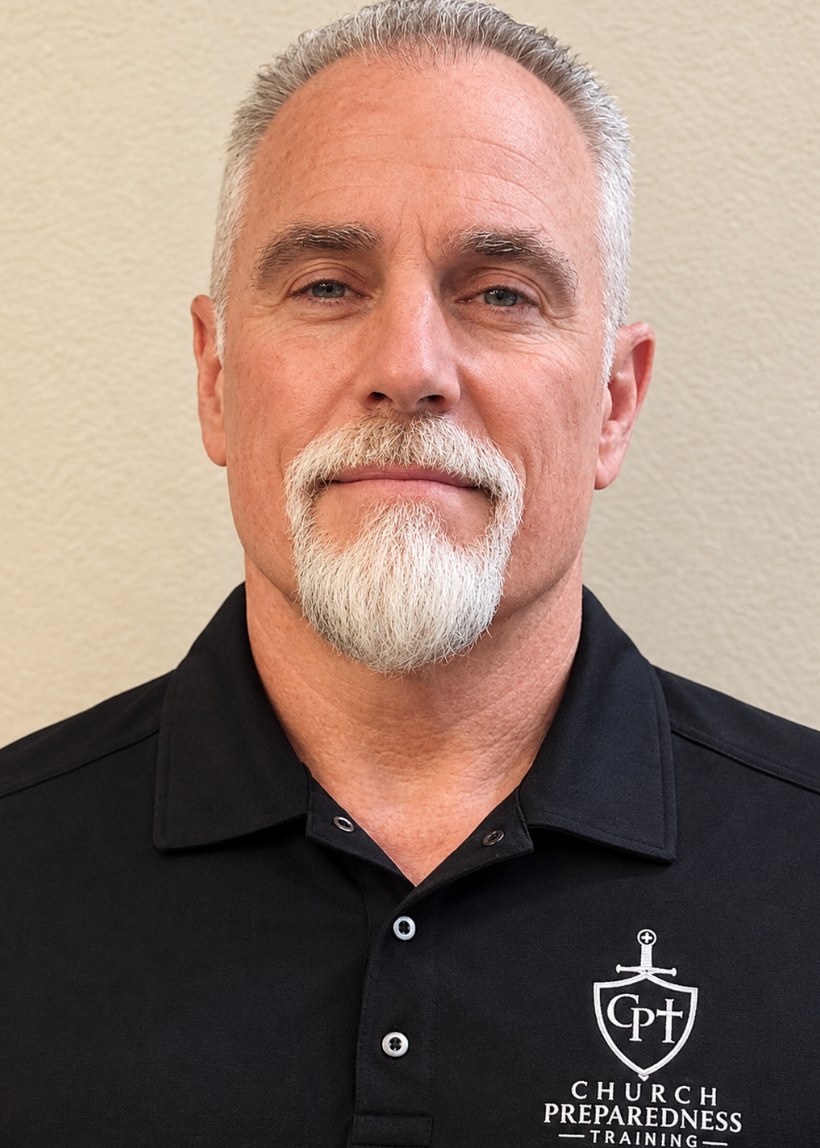
— Tom Fitzgerald, Co-Founder, Church Preparedness Training