
Key Takeaways
- Your greeters are already on the safety team. They see every person who walks in, which makes them your best early-awareness system.
- Awareness means knowing what's normal. When you understand your church's usual rhythm, the things that don't fit stand out on their own.
- Notice behavior, not appearance. What someone does matters far more than how they look.
- Notice, engage, communicate. A warm greeting and a quiet word to the safety team handle most situations.
- Hospitality and safety work together. The friendliest church door can also be the safest one.
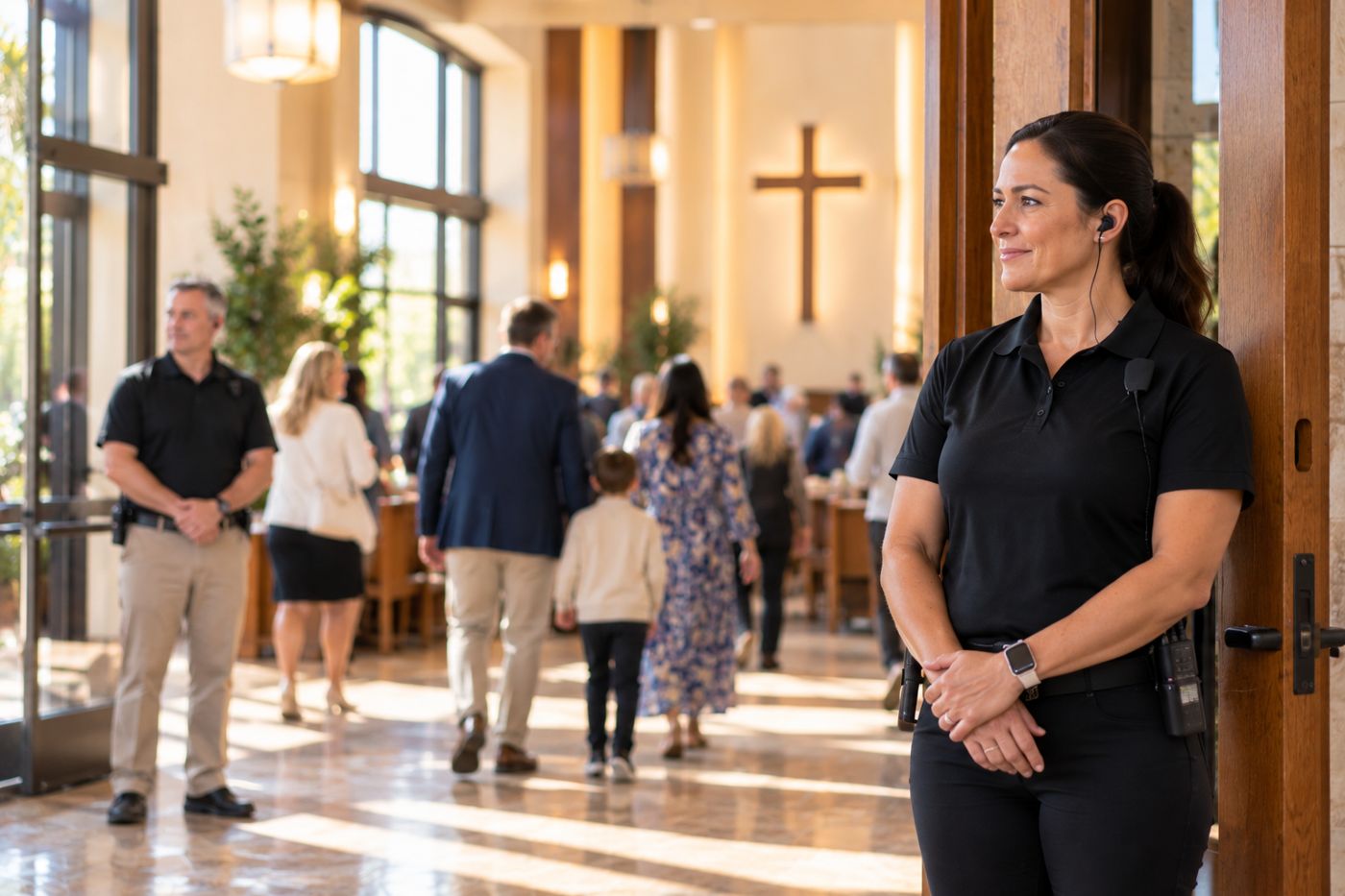
If you ask most people who the safety team is at their church, they'll point to the folks with radios. But some of the most important safety work on a Sunday morning is already being done by people who would never call themselves security: your greeters and ushers.
They are the first faces people see. They notice who is new, who seems lost, and who seems a little off. With some simple training, they can become your church's best source of awareness, without changing the warm welcome that makes people want to come back.
Having served as a deacon, a men's ministry leader and a safety team leader in my own church, I've seen how much a well-prepared front door matters. Here's how to help your greeters and ushers see more, respond well, and stay just as welcoming as they are today.
What Is Situational Awareness?
Situational awareness sounds technical, but it's simple. It means paying attention to what's happening around you so you notice when something isn't normal, and then knowing what to do about it.
It is not about being suspicious of everyone. It is about being present. A greeter who is fully present notices the visitor who looks nervous, the elderly member who seems unsteady, and the person whose behavior doesn't fit the setting.
Why Are Greeters and Ushers So Important to Church Safety?
Think about where your greeters and ushers stand: at the doors, in the aisles, and in the lobby. They see nearly every person who enters the building, and they see them first. That gives them something your safety team leader can't always have: early notice.
Early notice is valuable because it creates time. Time to say hello. Time to alert the team. Time for a calm response instead of a rushed one. In almost every situation, the earlier something is noticed, the easier it is to handle well.
How Do You Know What “Normal” Looks Like?
Every church has a rhythm. Families arrive in the last ten minutes before service. Regulars head to the same seats. Kids run toward the children's wing. Volunteers come early and gather in the same places. The parking lot fills in a familiar pattern.
When your greeters and ushers understand that rhythm, which experienced volunteers usually already do, the things that don't fit start to stand out without anyone having to look for them. This is often called establishing a baseline. You can't notice what's unusual until you know what's usual.
A simple exercise: ask your greeters to describe a typical Sunday at their door. Who arrives when? Where do people go first? What questions do visitors usually ask? You'll be surprised how much they already know.
What Should Greeters and Ushers Watch For?
None of the following automatically means someone is a threat. Most of the time there is an innocent explanation. These are simply reasons to pay a little more attention and maybe offer a friendly hello.
Behavior That Doesn't Match the Setting
Someone pacing, avoiding eye contact, repeatedly checking the doors instead of engaging with the service, or seeming unusually focused on the stage or a particular person.
Signs of Strong Emotion
Visible anger, agitation or distress, especially if the person seems focused on one individual, such as a former spouse, a family member or a staff member.
Clothing That Doesn't Fit the Conditions
A heavy coat on a warm day can simply mean someone is cold. It's still worth noticing, along with how the person is carrying themselves.
Interest in Non-Public Areas
Questions about where the offering is kept, attempts to enter the children's area without checking in, or wandering into offices and back hallways.
Vehicles and Parking
A car left running near an entrance, someone sitting in a parked car through the entire service, or a vehicle parked where it blocks an exit.
People Who Need Help
Awareness isn't only about threats. It's also about the visitor who can't find the restroom, the parent searching for a child, and the older member who looks pale or unsteady. Noticing these people is part of caring for your congregation.
How Should Greeters Respond When Something Feels Off?
We teach a simple pattern: notice, engage, communicate.
1. Notice
Pay attention to what you're seeing. Trust the feeling that something doesn't fit, but stay calm and open-minded.
2. Engage
In most cases, the best response is simply to be friendly. A warm “Good morning, is this your first time with us?” does two things at once. It welcomes a guest who may just be nervous, and it lets someone with bad intentions know they've been seen. A genuine conversation often resolves the concern entirely.
3. Communicate
Greeters don't need to handle anything on their own, and they shouldn't try to. They need to know who to tell and how to tell them quietly. That might be a radio call, a text to the safety team leader, or a simple hand signal you've agreed on ahead of time. The safety team takes it from there.
Want your greeters, ushers and safety team trained together? Situational awareness is part of every course we teach. Request a free on-site assessment to get started.
What Should Greeters Not Do?
Just as important as knowing what to do is knowing what not to do:
- Don't confront. Greeters are there to welcome and observe, not to challenge or physically stop anyone.
- Don't profile. Focus on behavior, not race, clothing style, age or appearance.
- Don't make a scene. Quiet communication keeps the congregation calm and gives the team room to respond.
- Don't stay silent. If something feels wrong, tell the team. It is always better to report something that turns out to be nothing.
How Do You Keep the Welcome Warm?
We never want a church to feel like an airport security line. Awareness and hospitality go hand in hand. The same person who notices a visitor looking for the restroom is the person who notices someone who doesn't seem right.
In fact, warm hospitality is one of the best safety tools a church has. People who are greeted, spoken to and remembered are less likely to slip through unnoticed, and someone who is struggling is more likely to receive help. Train your greeters for both, and your front door becomes both the friendliest and the safest place on your campus.
A Simple Way to Start This Week
- Gather your greeters and ushers for 20 minutes after a service.
- Ask them what they typically notice on a Sunday.
- Agree on exactly who they should tell when something feels off, and how.
- Make sure everyone knows where the first aid kit and AED are located.
- Thank them. They are doing important work.
That one conversation is a real step toward a safer church.
Frequently Asked Questions
What is situational awareness in a church setting?
It's paying attention to what is normal in your church so you notice when something isn't, and knowing who to tell. It applies to medical needs, lost children and upset visitors as much as to potential threats.
Should greeters and ushers be part of the safety team?
They don't need to be formal safety team members, but they should be trained in basic awareness and know exactly how to communicate with the safety team. They are often the first to notice a problem.
How do greeters report a concern without alarming the congregation?
Agree on a quiet method ahead of time, such as a radio code, a text to the team leader or a simple hand signal, so the team can respond calmly.
Isn't watching people unwelcoming?
Not when it's done well. Awareness is about being present and attentive, the same qualities that make a great greeter. Friendly engagement is both hospitable and protective.
How often should greeters receive safety training?
A short refresher a few times a year works well, along with a quick briefing whenever new volunteers join the team.
Do you train greeters and ushers, or only safety teams?
We train both, and we recommend training them together so everyone shares the same language and the same plan.
Request a Free Church Safety Assessment
Every church's front door is different. We'll come to your church, see how people arrive and move through your building, and help your greeters, ushers and safety team work together, starting with a free on-site assessment.
Request your free assessment →
— Kirk Henson, Co-Founder, Church Preparedness Training