Key Takeaways
- Character comes before credentials. Calm, humble, discreet and faithful people make the best safety team members, whatever their background.
- Screen everyone. Background checks protect your congregation, your children's ministry and your team.
- Balance makes a team stronger. Mix ages, genders and skills such as medical training and communication.
- Burnout is the biggest threat to a team. Rotations, reasonable training and time to worship keep volunteers serving for years.
- Leadership support is essential. When the pastor backs the team publicly, the whole church benefits.
Starting a church safety team is usually the easy part. Plenty of people raise their hands when the pastor asks. The harder part is building a team that is still strong, unified and well trained a year later, and five years after that.
In more than four decades of owning and leading businesses, and in years of serving my church as a council member, deacon, men's ministry leader and safety team leader, I've learned that teams succeed or fail on two things: choosing the right people, and caring for them well. A church safety team is no different.
Here is what Tom and I have learned about building a safety team that lasts.
What Is a Church Safety Team?
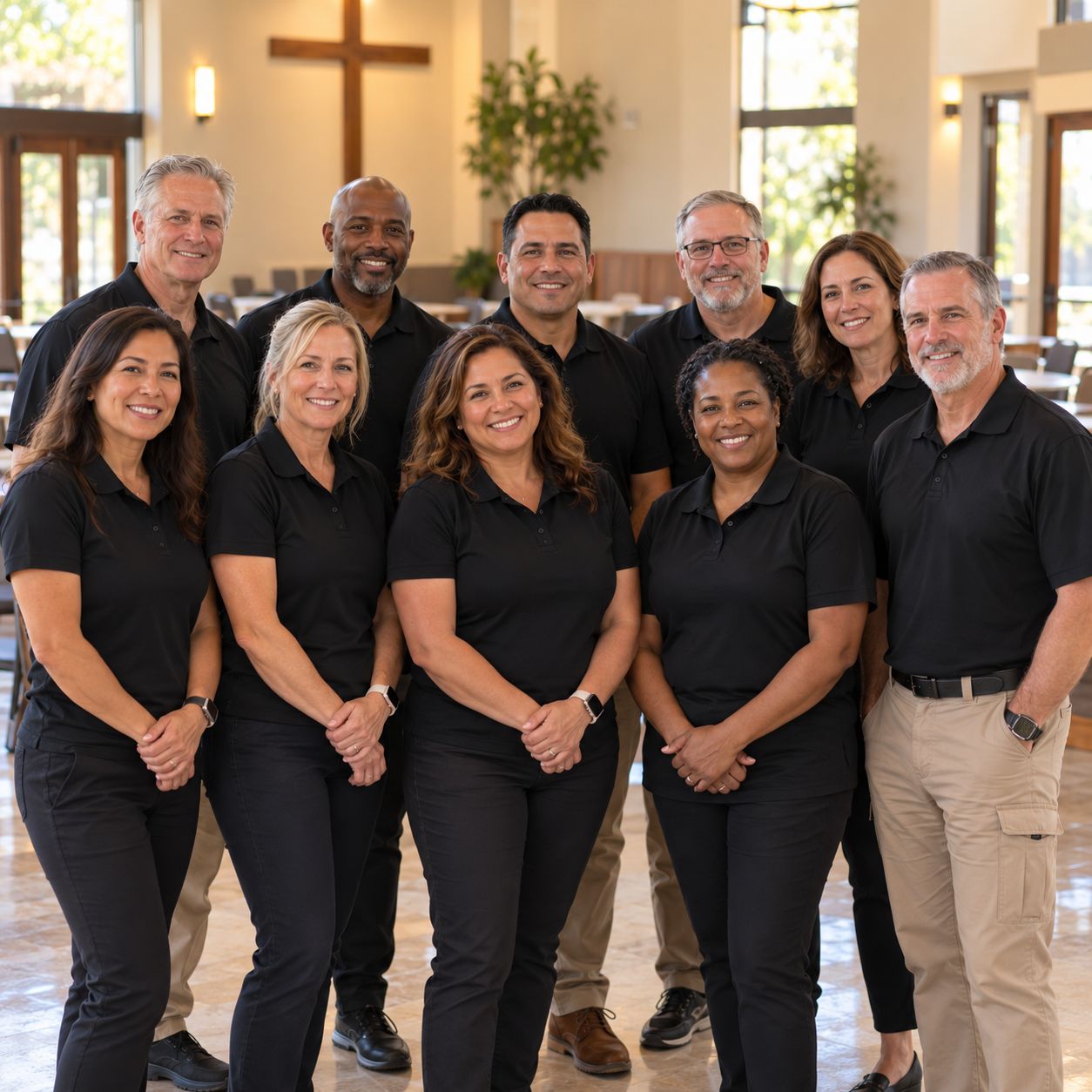
A church safety team is a group of trained volunteers who watch over the congregation during services and events. They respond to medical emergencies, help with disruptions, keep children's areas secure, assist with parking and entrances, and serve as the church's first response if something more serious happens.
A good safety team is mostly invisible. Members worship, greet people and serve, while staying aware and ready. When something does happen, they respond calmly and according to a plan they have practiced together.
Who Should Be on a Church Safety Team?
The best safety team members aren't always the people you'd expect. Experience in law enforcement, the military, medicine or security is valuable, but character matters most. These are the traits we look for:
Calm Under Pressure
The person who stays steady when the sound system fails or a child goes missing will usually stay steady when something more serious happens. Calm is contagious, and so is panic.
Humility and Teachability
Every team member needs to follow the plan, take direction and keep learning, no matter their background. Someone with years of experience who won't follow the team's plan can create more risk than they prevent.
Good People Skills
Most of what a safety team does is talk with people. Kindness, patience and the ability to de-escalate a tense conversation go a long way.
Discretion
Team members will see and hear sensitive things: medical issues, family conflicts, people in crisis. They must be able to keep confidences.
Faithful Attendance
A team member who is there consistently knows the congregation and notices when something changes. Familiarity is one of the team's most valuable tools.
A Heart for Service
The right people want to protect others, not to be seen as protectors. Watch for servant hearts rather than people looking for a title.
Should Church Safety Team Members Have Background Checks?
Yes. Every person serving on the safety team should complete a background check, especially anyone who may be near children's ministry. It protects your congregation and your children, and it protects the team members themselves. Many churches already run checks for children's volunteers, and the same process can usually be used for the safety team.
How Do You Build a Balanced Team?
A team made up entirely of one type of person will have blind spots. Look for balance:
- Men and women. Some situations, like helping in a restroom or with a distressed woman, are better handled by a female team member.
- Different ages. Younger and older members notice different things and connect with different people.
- Medical skills. Nurses, EMTs and doctors in your congregation are invaluable on medical calls.
- Communicators. People who are clear and calm on the radio help the whole team stay coordinated.
- Connectors. People who know everyone by name are often the first to notice when something is off.
How Many People Does a Church Safety Team Need?
It depends on your campus, the number of services, the size of your congregation and how many entrances and ministry areas you need to cover. A small church may start with a handful of people; a larger church may need several people per service plus a team leader. The right number comes from an honest manpower assessment, which is part of what we do during our on-site assessment.
Not sure how many people your church needs? We'll help you figure it out. Request a free on-site assessment.
How Do You Prevent Safety Team Burnout?
The most common reason safety teams fade isn't a lack of commitment. It's exhaustion. When the same few people serve every service, every week, they eventually wear out. These habits help a team last:
Build a Rotation
Know how many people you need for each service, then schedule so no one is serving every week. A shared calendar makes it easy for members to see when they're on and to trade when needed.
Let People Worship
Team members need Sundays where they can simply sit with their families and be fed. A volunteer who never gets to worship will eventually stop serving.
Keep Training Regular but Reasonable
Short, consistent sessions are better than long ones that are hard to attend. Many teams do well with a brief monthly or quarterly training, plus a quick briefing before each service.
Document Your Training
Keep a simple record of who attended which training and when. It helps you plan, it shows your church takes safety seriously, and it can matter to your insurance provider.
Say Thank You
A word of appreciation from the pastor or team leader matters more than most leaders realize. Celebrate your team. They are giving up a lot to serve.
How Do You Get Your Pastor on Board?
None of this works without support from church leadership. When the pastor understands the purpose of the team and talks about it with the congregation, team members feel valued, and church members know who to go to when they need help.
If your pastor is hesitant, start with the everyday benefits: faster medical response, better care for visitors, safer children's ministry. Most pastors quickly see that a safety team is an extension of pastoral care. Our free assessment is a good way to bring leadership into the conversation, since we walk the campus with them.
What Training Does a Church Safety Team Need?
At a minimum, your team should be trained in:
- Situational awareness and observation
- Medical emergency response, including first aid and AED use
- De-escalation and handling disruptive people
- Radio and team communication
- Your church's specific emergency protocols
- Use-of-force options, liability and the role of insurance, so leadership can make informed decisions
Scenario-based practice ties it all together. That's why we offer Role Play as an add-on to any course, so your team can rehearse real situations in your own building.
Frequently Asked Questions
How do you start a church safety team?
Start with pastoral support, choose a team leader, assess your campus and manpower needs, recruit a small group of the right people, run background checks, and schedule training. A free assessment is a simple first step.
Do church safety team members need law enforcement experience?
No. Experience can help, but character, calm and teachability matter most. With proper training, ordinary members of your congregation make excellent team members.
How often should a church safety team train?
Short, regular sessions, such as monthly or quarterly, plus a brief huddle before each service, keep skills fresh without overloading volunteers.
How do you keep safety team volunteers from burning out?
Use a rotation so no one serves every week, protect their time to worship, keep training reasonable, and thank them often.
Should we keep records of safety team training?
Yes. Simple records of who attended which training help you plan and show that your church takes safety seriously. Check with your insurer about any documentation they recommend.
Can you help us choose and organize our team?
Yes. Our Fundamentals training covers team selection, balance, background checks, manpower assessment, scheduling and training documentation. See details on our Training & Pricing page.
Request a Free Church Safety Assessment
You don't need a large team to begin. A handful of the right people, a clear plan and regular training will take you further than a big team that isn't prepared. Tom and I would be glad to help you assess your manpower, choose your team and set up a schedule that lasts, starting with a free visit to your church.
Request your free assessment →
— Kirk Henson, Co-Founder, Church Preparedness Training